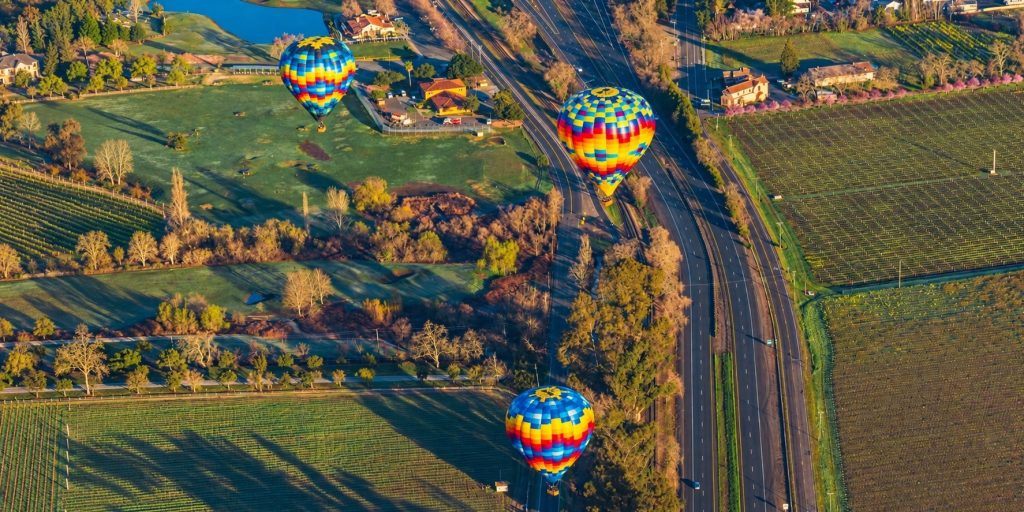
A hot air balloon weight limit is not usually a single number that applies to every passenger or flight. Pilots consider the total aircraft load, balloon size, fuel, passenger load, temperature, altitude, and daily conditions. This guide covers what to expect before your first hot air balloon ride.
Quick Answer: Yes. Hot air balloons have operating weight limits, but no universal passenger limit applies to every commercial balloon. The pilot must keep the total aircraft load within safe operating limits while accounting for current conditions.
Is There a Hot Air Balloon Weight Limit Per Person?
A hot air balloon weight limit per person depends on the operator, aircraft, basket configuration, and company policy. A number listed by one balloon company may not apply to another. For example, Napa Valley Aloft does not ask passengers to provide their weight when booking. Instead, its FAA-certified pilots are trained to evaluate aircraft loading, operating conditions, and the factors that determine how a balloon can be flown safely. If you have concerns about your comfort, mobility, or ability to enter the basket, contact your company of choice before booking.
How Do Hot Air Balloon Weight Limits Work?
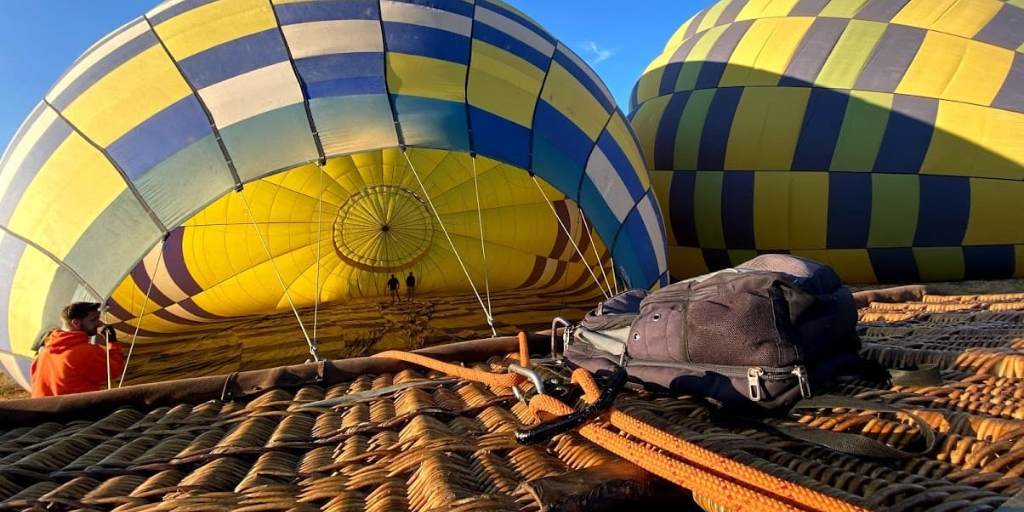
Pilots have to account for the complete operating load. How much a balloon can safely carry changes with the aircraft and the conditions it is flying in.
Total Weight Matters More Than One Passenger’s Weight
The total load includes the envelope, basket, burners, fuel, pilot, passengers, and other equipment. The pilot keeps that combined load within the aircraft’s operating limitations.
How Lift and Buoyancy Affect Weight Capacity
A balloon rises when its burners heat the air inside the envelope, making that air less dense than the cooler air around it. The resulting buoyancy creates lift.
Lift is limited, and outside conditions matter. Cooler air generally provides more favorable lift conditions, while higher temperatures and higher elevations can reduce them.
What Affects How Much Weight a Hot Air Balloon Can Carry?
Envelope volume, basket size, fuel, passenger load, temperature, altitude, atmospheric conditions, and the aircraft’s operating limitations all affect capacity. Pilots evaluate these factors during flight planning rather than relying on a single universal passenger-weight number.
- Basket size – a larger basket can generally carry more weight, but it also requires a larger envelope to maintain proper lift. Balancing basket size and envelope volume is crucial to prevent overloading the balloon.
- Envelope volume – a hot air balloon’s envelope volume refers to the air it can hold. A larger envelope volume means that the balloon can carry more weight. However, larger envelopes also require more fuel to heat the air, and this can affect the balloon’s performance.
- Ambient temperature – hot air balloons heat the air inside the envelope, making it less dense than the surrounding air.
- Weight of balloon and equipment – the weight of the balloon and equipment, including the envelope, basket, burners, and fuel.
- Weight of passengers and any equipment they bring
How Many People Can Fit in a Hot Air Balloon?
Passenger capacity varies widely. Small recreational balloons may carry a pilot and a few passengers, while larger commercial balloons are designed for larger groups. For example, Napa Valley Alfot baskets can accommodate up to 20 people. The number of available spaces still depends on aircraft limits and the day’s conditions.
Why Does Balloon Size Affect Passenger Capacity?
Capacity matches the aircraft’s average size. A larger envelope contains more heated air and can generate more lift, allowing it to support a larger basket and passenger load. Commercial baskets may also have separate compartments that help organize passengers and distribute weight.
How Many People Can Fly With Napa Valley Aloft?
Napa Valley Aloft operates different balloon configurations so that passenger counts can vary. Its large baskets can accommodate up to 20 people.
Does Hot Air Balloon Basket Size Matter?
Basket size affects passenger capacity and the feel of the ride, but smaller does not automatically mean more comfortable. Commercial baskets are designed for passenger space, weight distribution, and landing needs.
How Balloon Baskets Are Designed for Weight and Balance
Many commercial baskets use internal partitions that separate passengers into smaller sections, provide rail space, and help organize the load. Pilots may also assign guests to particular areas based on group size and weight distribution.
Are Smaller Hot Air Balloon Baskets Better?
Smaller baskets can create a more personal atmosphere, while properly designed larger baskets can still provide comfortable viewing space and a stable ride.
Napa Valley Aloft’s medium and large baskets accommodate 12-, 16-, and 20-people with comfortable viewing space. Its FAA-certified pilots also rotate the balloon during flight, giving all passengers views of the vineyards and hills below.
Shared vs. Private Balloon Flights: Which Is Right for You?

A shared flight suits travelers who want to experience sunrise with other guests. A private flight offers more seclusion for proposals, anniversaries, honeymoons, or milestone celebrations. Both provide open-air views. The difference is in the privacy and group atmosphere.
Do Hot Air Balloons Have Seats?
Most standard commercial hot air balloon baskets do not have passenger seats. Guests stand during the flight and use the basket’s handholds or rails as instructed.
Do You Sit or Stand During a Hot Air Balloon Ride?
At Napa Valley Aloft, passengers should be able to stand for the full flight, typically 45 minutes to one hour. Guests also need to walk on uneven ground and follow the pilot’s landing instructions.
Why Don’t Most Hot Air Balloons Have Passenger Seats?
Hot air balloon seats take up basket space and affect how passengers and weight are arranged. Standing also gives guests an open view.
Do You Get Weighed Before a Hot Air Balloon Ride?
Policies differ by operator. Some companies collect passenger weights during booking or use individual weight policies. Napa Valley Aloft does not ask passengers for their weight or weigh guests before the flight. Its FAA-certified pilots are trained to manage the aircraft within its operating requirements while considering the balloon, passenger load, weather, temperature, and other flight conditions.
Weight, Comfort & Safety When Flying With Napa Valley Aloft
Passenger weight is not the main concern when deciding whether ballooning is a good fit. Napa Valley Aloft asks passengers to stand for 45 minutes to one hour, walk across uneven ground, climb into and out of a basket without a door, and follow the landing position the pilot gives. Children must be at least six years old and 48 inches tall.
Napa Valley Aloft’s pilots are FAA-certified, and the company has 100+ years and 20,000 hours of combined pilot experience. FAA-designated repair stations inspect its equipment regularly. Once those practical details are covered, guests can focus on the early-morning lift, vineyard scenery, and sweeping Napa Valley views.
- RELATED: How Safe Are Hot Air Balloons?
What Happens If You Exceed the Weight Limit?
Exceeding a hot air balloon’s weight limit can have serious consequences. Here are some of the key considerations:
Safety Considerations
It is extremely important not to exceed a hot air balloon’s weight limit. Doing so can be incredibly dangerous, as it may cause the balloon to be unable to lift off the ground or maintain altitude, leading to a crash landing that can result in serious injury or even death.
- RELATED: How Do Hot Air Balloons Land?
Furthermore, going over the weight limit can negatively impact the balloon’s handling, making it more difficult to control, particularly in windy conditions, which can significantly increase the risk of accidents.
Balloon Performance Impacts
Staying within the weight limit when taking a balloon ride is important. Exceeding the limit can negatively impact the balloon’s performance. It may not reach its maximum altitude or stay in the air for its intended duration.
This can result in an unsatisfactory experience for passengers.
Moreover, exceeding the weight limit can make the balloon unstable, causing passenger discomfort and increasing the risk of accidents.